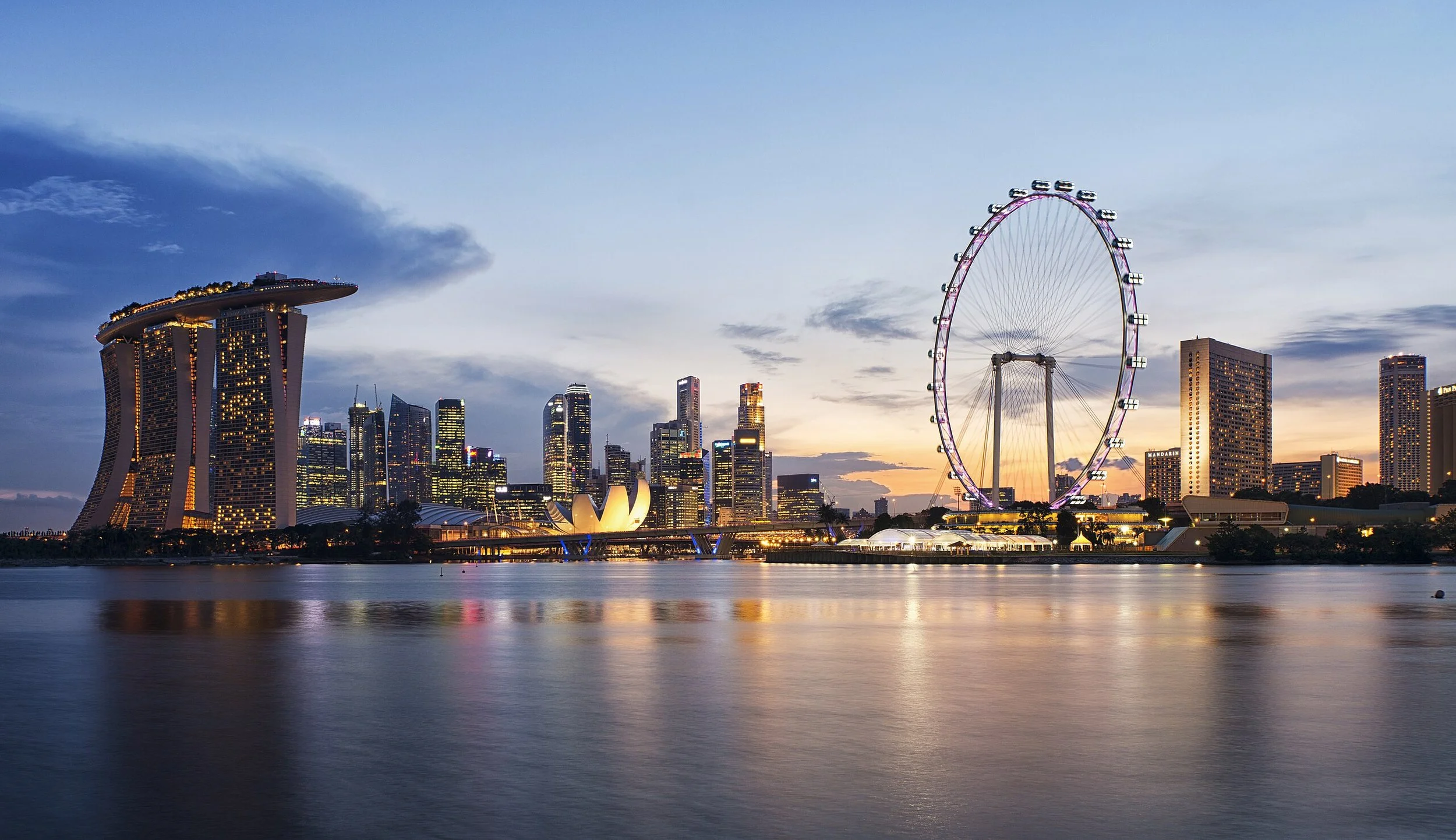
Singapore.
Here, we have curated a list of some of our favourite things to eat, drink and do in the Little Red Dot. Despite being a small country, there’s plenty to keep you busy.
Eat
Breakfast
Kaya toast. Toast with butter and kaya (coconut jam). Often served as a set with kopi (or teh — see below) and soft-boiled eggs. Try it at Ya Kun Kaya Toast, Toast Box, or Killiney.
Youtiao. Cindy’s mum’s favourite (unhealthy) breakfast. Deep-fried dough, sort of like churros. Usually served with soya bean milk.
Dim sum. Myriad small Chinese dishes. Often eaten for brunch, but can be eaten at any time of the day. Din Tai Fung is a world-famous chain (and a little more ‘upmarket’), or Tim Ho Wan is also popular. For a cheap and cheerful (but no less tasty) option, we recommend Swee Choon in Jalan Basar — we often meet friends here when we visit Singapore. https://maps.app.goo.gl/tpCLZVPYt2YbTudj9
Lunch & dinner
Chilli crab. An iconic Singapore dish of crab stir-fried in a tomato and chilli sauce. Best found at any JUMBO seafood restaurant, but we think JUMBO East Coast is the best. https://maps.app.goo.gl/VWjYH4wbF3dF9n4R7
Laksa. Noodles in a spicy coconut curry soup topped with chicken, prawns or fish. 328 Katong Laksa is a popular chain. https://maps.app.goo.gl/Qdnkmf8Atmfvdida7 (there are stores in other locations too)
Nasi lemak. Rice cooked in coconut and pandan served with a bewildering array of side dishes. Find it in any hawker centre, but we particularly like Ponggol Nasi Lemak for their variety of accompaniments (if you can work out what they are!). https://maps.app.goo.gl/xdg35v6aLvUjkLex9
Bak kut teh. Pork ribs cooked in a comforting peppery herbal broth. Song Fa is a famous chain. https://maps.app.goo.gl/T3LFY33YHeZYETNJ7 (there are stores in other locations too)
Frog porridge. It’s not just the French who like to eat frog. Frogs legs braised in a savoury sauce served with rice porridge. Available with or without chilli. Most people would recommend Geylang Lor 9. https://maps.app.goo.gl/8ENztKrsYvTPMZ3A7
Herbal roast duck. Similar to Peking duck but less sweet and more herbal. Dian Xiao Er is the benchmark restaurant chain. https://www.dianxiaoer.com.sg/
The following classic Singaporean/Malaysian dishes can be found in most hawker centres (outdoor food courts). There are so many hawker centres in Singapore; some famous ones include Maxwell Hawker Centre, Golden Mile Food Centre, and Old Airport Road Food Centre — but don’t limit yourself to these.
Chicken rice. The national dish of Singapore. Poached chicken served with seasoned rice, classically with chilli sauce and cucumbers.
Hokkien mee. Cindy’s dad’s favourite. Stir-fried egg noodles with sliced pork, prawns and squid. Often a little saucy.
Char kway teow. Stir-fried flat rice noodles with garlic, dark soy sauce and, typically, prawns.
Bak chor mee. Minced pork noodles in a tangy vinegary sauce. Customisable with different toppings but usually with meatballs, crispy lard and pig’s liver.
Roti prata. Aka roti canai. Flaky Indian flatbreads served with curry.
Desserts & sweet treats
Tick off many of these desserts in one hit at a Chinese dessert shop. Our favourite is Yat Ka Yan in Fortune Centre (https://maps.app.goo.gl/ztU5jERqDPHWWi4w8). Ah Chew is another popular (and very busy) spot (https://maps.app.goo.gl/QVZ5mhxGi72LMJzs5). These desserts are also available in hawker centres.
Mango sago. Sam’s favourite Asian dessert. Chunks of mango in creamy coconut milk with chewy tapioca pearls.
Sesame paste. Cindy’s favourite dessert. Black sesame paste usually eaten on its own. You can also find peanut, almond and (Cindy’s mum’s favourite) taro paste.
Cendol. Pandan-flavoured strips of jelly with coconut and palm sugar served over shaved ice.
Ice kachang. Another ice dessert, this time shaved ice topped with red bean and brightly-coloured syrups.
Tau huay. A Chinese dessert of sweetened silken tofu.
Grass jelly. A cooling herbal jelly dessert. Sometimes served with other toppings (bubar cha cha).
Bengawan Solo is a well-known bakery chain found all over Singapore. Choose anything, but Sam’s favourite is pandan chiffon cake. Cindy likes kuehs, which are little cakes made of glutinous rice that come in lots of varieties (e.g. kueh ambon). Kueh lapis is a multilayered (sometimes colourful) cake that is often given as a gift due to the effort required to bake it. https://bengawansolo.sg/
Fruits
Obviously, these are seasonal. But, you can usually find these all year round.
Durian. The king of fruits. So pungent it is banned from public transport and many hotels. It’s an acquired taste, but you have to try it. Sam wasn’t sure the first time, but now he can’t eat enough of it. There are many varieties, all with different properties. If you want to nerd out about it (as Sam does), read this blog post: https://ieatishootipost.sg/the-ultimate-singapore-durian-guide/
Mangosteen. Commonly eaten after durian to combat durian’s “heatiness” (a concept from Traditional Chinese Medicine).
Lychee. Probably familiar to everyone, but much better than the ones available in the UK.
Rambutan and longan. Both similar to lychee.
Water apple. Aka rose apple. Like a cross between an apple and a pear. Crunchy and refreshing.
Star fruit. A citrusy fruit served in star-shaped slices.
Dragon fruit. The fruit of some cactus trees. Available in white and red varieties.
Watermelon. Not a novel fruit, but use your time in Singapore to eat some watermelon with actual flavour (unlike in the UK). Try the yellow variety.
Drink
Kopi. The quintessential Singaporean drink. Coffee beans heavily roasted in margarine and sugar for a unique flavour. Served all over Singapore in kopitiams. While usually served with condensed milk, unlimited customisations can make ordering kopi a little confusing at first. Cindy usually orders Kopi O Kosong (black coffee without sugar), while Sam usually has Kopi C Siew Dai (coffee with evaporated milk and less sugar). See https://www.visitsingapore.com/things-to-do/dining/local-food-and-drinks/order-coffee-like-a-local/.
Teh. Black tea from a kopitiam. The same customisations apply as for kopi (Teh, Teh O, Teh C etc.)
Milo. Malted chocolate drink by Nestle. Usually served with ice. For the true Singaporean experience, order a Milo dinosaur (iced Milo topped with undissolved Milo powder).
Sugar cane juice. A hawker centre favourite. Literally as described.
Lime juice. Sweet and sour calamansi juice. Sam’s go-to drink to combat rich, fatty food.
Barley water. A traditional drink made from boiling barley grains in water then slightly sweetened. Served warm or iced.
Young coconut. Served by cutting the top off a young coconut and inserting a straw. Delicious, sweet juice with the added bonus that you can eat the remaining flesh afterwards.
Singapore sling. A gin-based tropical cocktail made famous at the Long Bar in Raffles Hotel.
As you can tell, we are obsessed with food. Believe it or not, this list is only our highlights. We haven’t even touched on the other global cuisines available in abundance in Singapore (Japanese, Korean, Indian). If you want to eat something specific, let us know and we probably have (or can find) a recommendation.
Do
Marina Bay. Explore this iconic area of Singapore with the Mariana Bay Sands hotel and Gardens by the Bay (Singapore’s “City in a Garden”). Esplanade is an interesting building (shaped like a durian) and often has free music events. Every evening at 8pm and 9pm (and 10pm on Fridays and Saturdays) there is a free light show over the water.
For architecture, history and a mixture of cultures, walk around Chinatown, Little India, Kampong Glam or Katong/Joo Chiat. Chinatown and Little India have many temples and interesting shops. Kampong Glam is Singapore’s Muslim Quarter. Joo Chiat contains the residential conservation area where you can see traditional shophouses from colonial-era Singapore.
Clarke Quay. Great for nightlife, with many bars, clubs and restaurants close to Marina Bay.
Orchard Road. The Oxford Street of Singapore (on steroids). Just walk along the street or shop to your heart’s content.
Jewel. The shopping mall at Changi airport famous for the world’s largest indoor waterfall. Best visited on your way in or out of Singapore.
National Museum of Singapore. Sam’s favourite museum in Singapore. Tells the story of Singapore from its founding as a British colony to the thriving modern metropolis it is today. https://www.nhb.gov.sg/nationalmuseum/
Singapore Zoo or Bird Paradise. Worthwhile if you have some extra time and want to see some animals. Bird Paradise has recently opened to replace Jurong Bird Park.
Sentosa. The island resort connected to the mainland by road, cable car, monorail or pedestrian walkway. Has a beach (with the southernmost point of continental Asia) and Universal Studios. Connected to Fort Canning Hill (formerly used as the British Army headquarters in Singapore), and VivoCity (the largest shopping mall in Singapore).
If you’ve had enough of city life and want some nature, we recommend walking or cycling along East Coast Park; seeing the orchids and surviving rainforest at Botanic Gardens; or taking the Treetop Walk at MacRitchie Reservoir. There are also several nearby islands you can explore, including Pulau Ubin (a 10-minute ferry ride from Changi Point and a favourite among Singaporeans for outdoor activities, especially cycling).